Norway’s Next Frigate: Evaluating the Contenders for the Royal Norwegian Navy
The Royal Norwegian Navy’s future frigate program is more than a fleet renewal—it’s a strategic pivot. Each candidate offers compelling advantages, but the final decision will hinge on a mix of capability, cost, delivery speed, industrial cooperation, and geopolitical alignment

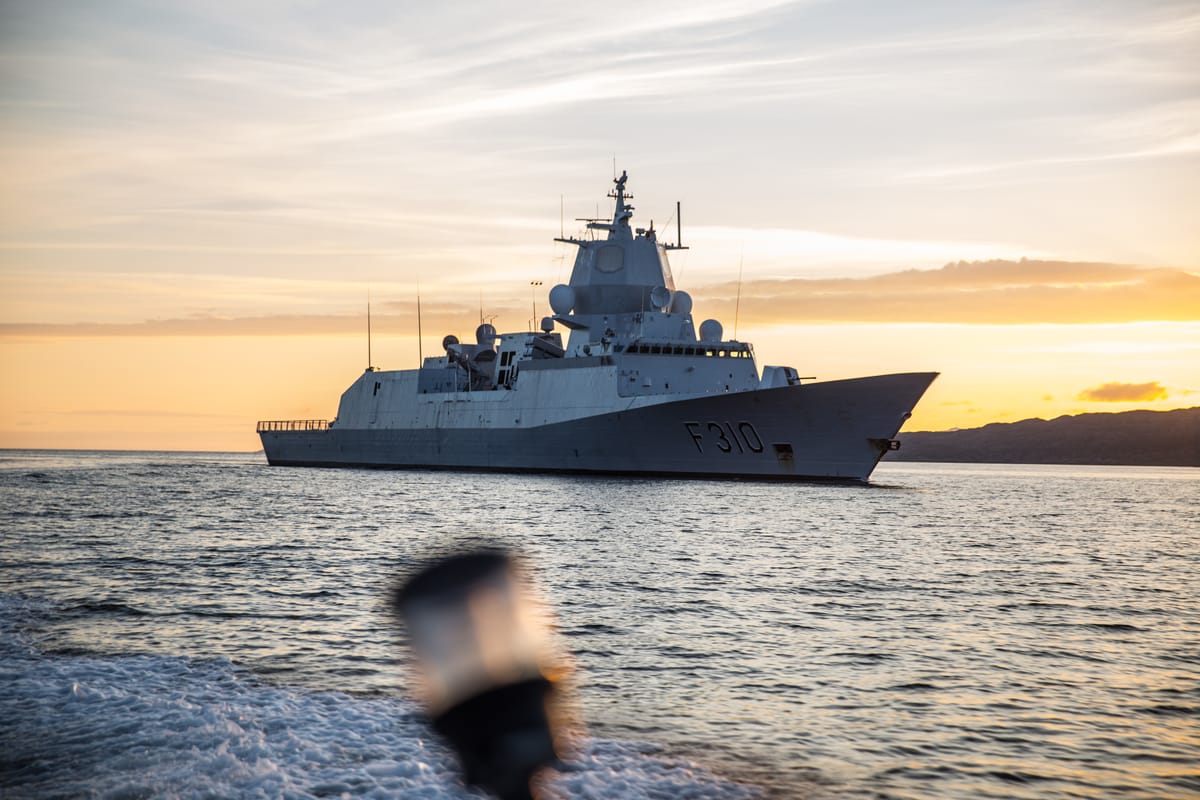
As the Royal Norwegian Navy prepares to replace its Fridtjof Nansen-class frigates, the Ministry of Defence has launched one of the country’s most ambitious naval modernization programs in decades. With a projected investment of over NOK 100 billion (approx. €9 billion), Norway aims to acquire at least five new frigates by 2029, with an option for a sixth. The goal is to strengthen anti-submarine warfare (ASW) capabilities, enhance NATO interoperability, and secure long-term strategic partnerships.
Why Replace the Nansen-Class?
Commissioned between 2006 and 2011, the Nansen-class frigates were built by Spain’s Navantia and have served as the backbone of Norway’s surface fleet. However, the tragic 2018 sinking of HNoMS Helge Ingstad after a collision exposed vulnerabilities in survivability and damage control. With increasing Russian submarine activity in the North Atlantic and Arctic, Norway needs more capable and resilient surface combatants.
As Prime Minister Jonas Gahr Støre stated during the unveiling of Norway’s new defense plan: “The insurance premium is rising.” He emphasized that the Navy will receive the largest share of defense funding, including the largest single project in the form of a new frigate class.
The Shortlist: Four NATO Allies
In late 2024, Norway narrowed its list of potential partners to four NATO countries: France, Germany, the United Kingdom, and the United States. Each offers a modern, in-production frigate design that aligns with Norway’s strategy to join an existing program and avoid costly interim upgrades to the Nansen-class.
| Country | Frigate Class | Displacement | Crew Size | Key Strengths |
|---|---|---|---|---|
| 🇬🇧 United Kingdom | Type 26 (BAE Systems) | ~6,900 tons | ~157 | Advanced ASW, modular design, NATO-aligned |
| 🇫🇷 France | FDI (Naval Group) | ~4,500 tons | ~125 | Compact, cost-effective, strong air defense |
| 🇩🇪 Germany | F126 (ThyssenKrupp) | ~10,600 tons | ~230 | Large multirole platform, industrial cooperation |
| 🇺🇸 United States | Constellation-class | ~7,300 tons | ~200 | FREMM-based, US-NATO interoperability |
Pros and Cons of Each Candidate
🇬🇧 Type 26 Global Combat Ship
- Pros:
- Designed for anti-submarine warfare, a top Norwegian priority.
- Adopted by UK, Australia, and Canada, enhancing NATO cohesion.
- Modular mission bays allow future upgrades and unmanned systems.
- Cons:
- Higher cost per unit.
- Still early in production; delivery timelines may be tight.
🇫🇷 FDI (Frégate de Défense et d’Intervention)
- Pros:
- Most compact and affordable option.
- Low crew requirement—ideal for Norway’s recruitment challenges.
- Cons:
- Smaller hull limits future expansion.
- Less robust ASW capabilities compared to Type 26.
🇩🇪 F126
- Pros:
- Largest and most versatile platform, suitable for multirole missions.
- Germany offers industrial cooperation, including the integration of Norwegian Kongsberg missiles.
- Strong political and defence ties with Norway.
- Cons:
- Large crew requirement (230+), which may strain personnel resources.
- Size may be excessive for Norway’s specific operational needs.
🇺🇸 Constellation-class
- Pros:
- Based on the proven FREMM design, with enhancements for US Navy.
- Compatible with MH-60R Seahawk helicopters, already ordered by Norway.
- Strong strategic alignment with the US in the North Atlantic.
- Cons:
- Program has faced delays and cost overruns.
- Political unpredictability in US defense policy could affect long-term cooperation.
Strategic Vision and Official Statements
Norwegian officials have emphasised that the frigate program is not just about acquiring ships—it’s about building strategic partnerships for the long term.
“The new frigates represent the largest acquisition planned for the Norwegian Armed Forces in the coming years,” said Bjørn Arild Gram, Norway’s Minister of Defence. “Norway is an important maritime nation in NATO, and through this and other maritime investments we will be strengthening both national and allied security.”
Gram also highlighted the importance of choosing a partner that shares Norway’s strategic interests in the High North and is willing to commit to joint operation, maintenance, and upgrades over the frigates’ service life.
A Defining Naval Decision
The Royal Norwegian Navy’s future frigate program is more than a fleet renewal—it’s a strategic pivot. Each candidate offers compelling advantages, but the final decision will hinge on a mix of capability, cost, delivery speed, industrial cooperation, and geopolitical alignment.
A final decision is expected in 2025, with the first new frigate entering service by 2029. Whichever design is chosen, the outcome will shape Norway’s naval posture—and its role in NATO—for decades to come.